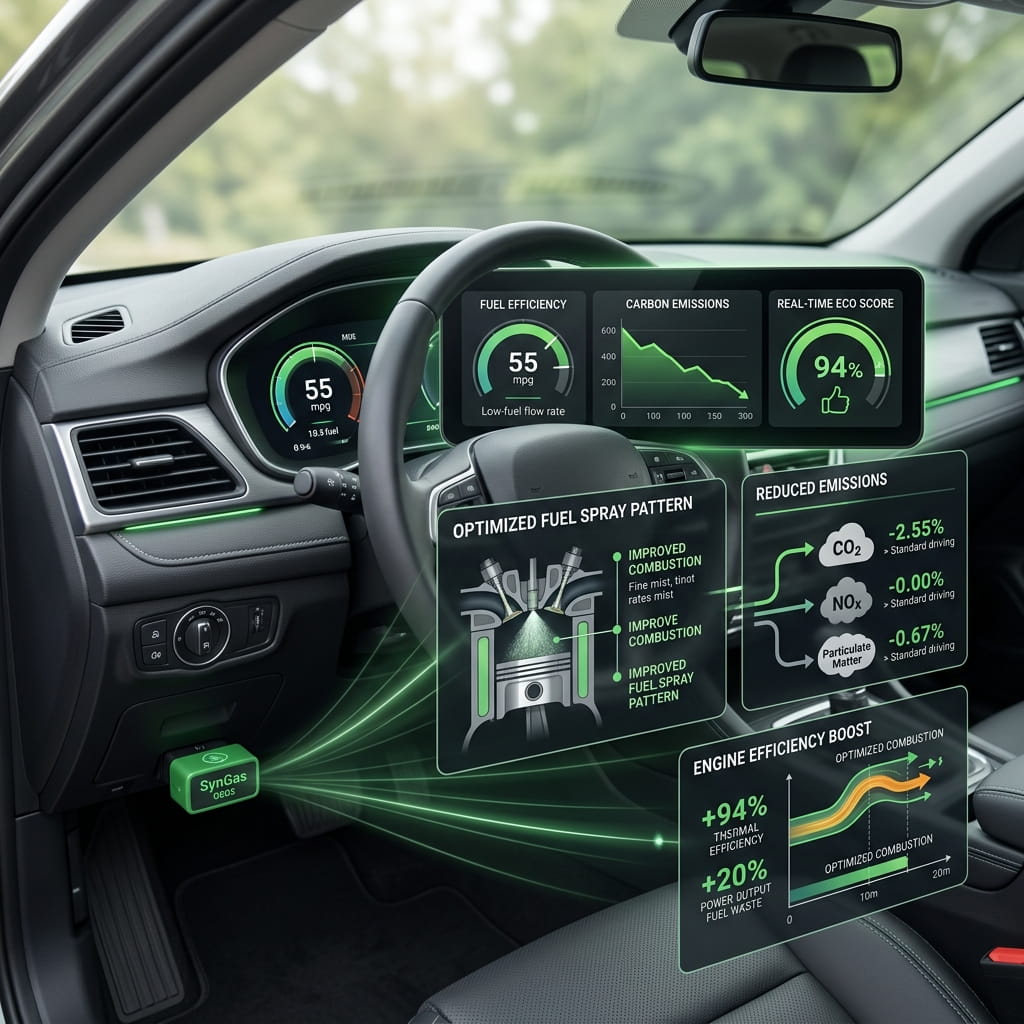
Both driving habits and OBD2 tools influence fuel economy, but behavioral changes deliver larger, more consistent gains. Syngas complements smarter driving by providing actionable engine data within factory specifications.
Key Takeaways
- Aggressive acceleration, hard braking, and excessive idling can reduce mileage by up to 30 percent.
- OBD2 devices like Syngas read real-time engine data to suggest or enable minor optimizations.
- Real-world fuel savings typically range from 5 to 15 percent when combining device use with better habits.
- Vehicle maintenance, proper tire pressure, and reduced cargo load affect results more than any single gadget.
- Consistent, gentle driving habits create the essential foundation for measurable, lasting efficiency gains.
- Continuous data feedback helps drivers identify and correct wasteful patterns they might otherwise overlook.
How OBD2 Fuel Savers Actually Work
Understanding the technology helps set realistic expectations for what these devices can achieve.
The OBD2 port, standard in vehicles since 1996, provides access to engine management data. Syngas connects to this port to monitor parameters like fuel trim, ignition timing, and sensor feedback. Rather than overriding factory settings, it works within OEM tolerances to fine-tune delivery for efficiency.
The Science Behind Engine Optimization
Modern engines rely on closed-loop systems that constantly adjust fuel-air mixture and spark timing. Small refinements to these parameters, when aligned with driving conditions, can reduce unnecessary fuel consumption. Syngas leverages this by analyzing real-time data and applying adjustments that stay within manufacturer specifications.
Driving Habits That Move the Needle Most
Behavioral changes consistently deliver the largest fuel economy improvements, regardless of device usage.
- Smooth acceleration: Gradual inputs use significantly less fuel than rapid throttle requests.
- Steady highway speeds: Maintaining a steady pace (ideally between 45 and 65 mph) optimizes aerodynamic efficiency.
- Reduced idle time: Minimizing idling (especially beyond 30 seconds) prevents wasting fuel without moving.
- Tire pressure: Proper tire inflation can improve mileage by up to 3 percent according to Department of Energy (DOE) data.
- Weight reduction: Removing unnecessary cargo and unused roof racks reduces drag and engine load.
Syngas in Context: What to Expect Realistically
Honest expectations prevent disappointment and help users maximize the value of any efficiency tool.
Syngas is designed for plug-and-play installation with no mechanical expertise required. Most users report subtle improvements within the first few tank cycles, with more consistent gains emerging after two to four weeks of normal driving. Results vary based on vehicle age, maintenance history, and typical driving patterns. Independent testing suggests potential improvements of 5 to 15 percent when the device is used alongside conscientious driving habits.
Legitimacy Check: Separating Claims from Reality
Skepticism about fuel-saving devices is reasonable, so transparency about capabilities matters.
Syngas complies with FCC regulations for electronic automotive accessories and operates within OBD2 protocol standards. It does not promise miraculous gains or override safety systems. No device can compensate for neglected maintenance, severe driving conditions, or fundamentally inefficient vehicle designs. The most credible results come from users who combine the tool with baseline vehicle care and mindful driving.
Comparing Approaches: Device vs. Behavior vs. Both
Evaluating impact levels helps prioritize efforts for maximum fuel economy improvement.
| Approach | Typical Mileage Impact |
|---|---|
| Driving habits alone | Up to 30 percent improvement possible with consistent changes |
| Syngas device alone | Modest gains, typically 3 to 8 percent in controlled conditions |
| Combined strategy | Synergistic effect, often 10 to 15 percent with realistic expectations |
| Foundation first | Maintenance and tire pressure deliver baseline gains any approach builds upon |
Note: Percentages represent potential improvements relative to inefficient baseline driving, not guaranteed outcomes.
Maintenance Matters More Than Gadgets
Before investing in any efficiency tool, ensure your vehicle receives regular oil changes, clean air filters, and proper tire inflation. These foundational steps often yield greater returns than add-on devices and create the conditions where tools like Syngas can perform optimally.
Frequently Asked Questions
Will an OBD2 fuel saver work on any vehicle?
Most gasoline vehicles built after 1996 support OBD2 protocols. Diesel and hybrid compatibility varies, so check Syngas specifications for your make and model before purchasing to ensure proper functionality.
How quickly will I see improved mileage after installation?
Many users notice subtle changes within a few tank cycles. Significant, consistent improvements typically appear after two to four weeks of normal driving with the device active and habits adjusted.
Can I still get good mileage without buying a device?
Absolutely. Smooth acceleration, steady highway speeds, and regular maintenance deliver measurable savings. An OBD2 tool simply makes it easier to track and refine those habits with data-driven feedback.
The most reliable path to better mileage isn't choosing between technology and behavior, but using data to reinforce smarter driving. When expectations are realistic and maintenance is current, tools like Syngas can help motivated drivers extract incremental gains that add up over time, mile after mile.
Combine Tech and Driving Habits for Maximum Mileage
Get the authentic SynGas formula directly from the official manufacturer. Order now for exclusive discounts.
Buy Now at the Official Website