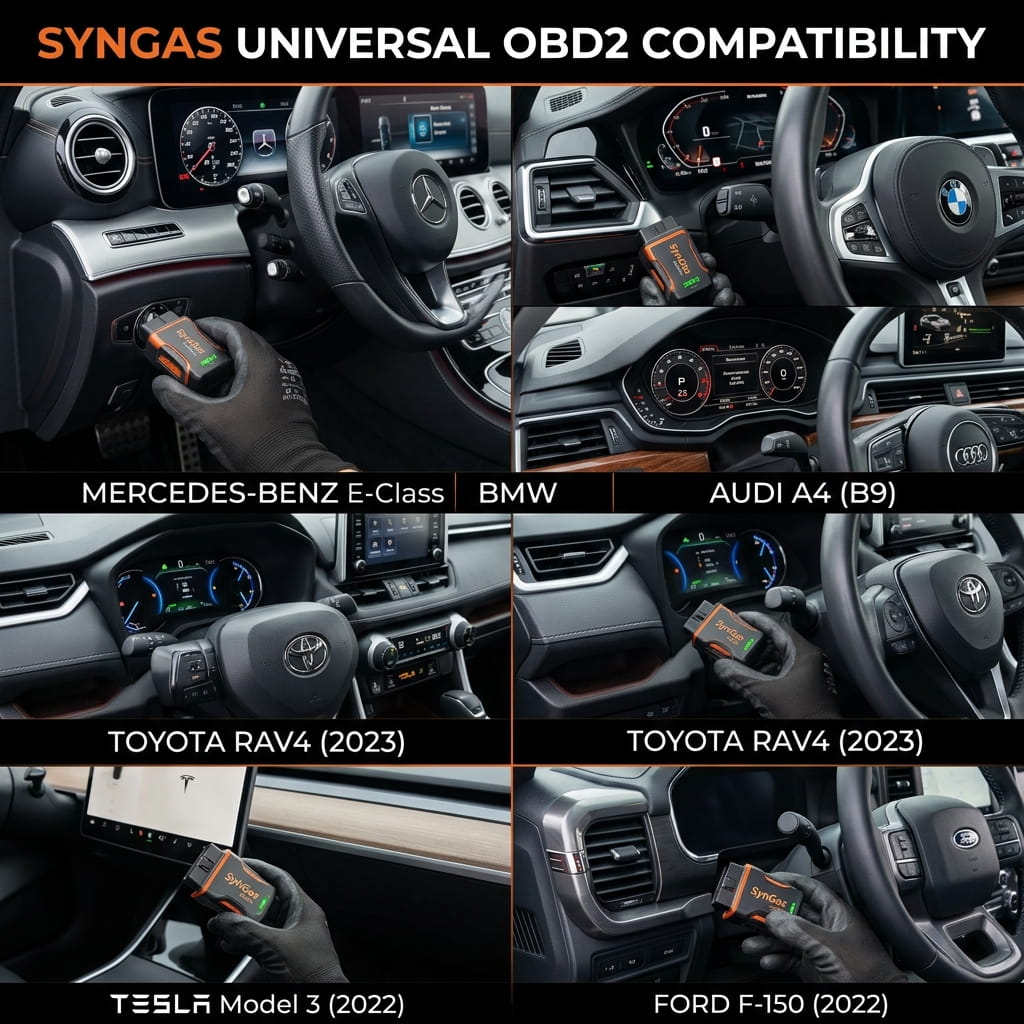
SynGas OBD2 claims to optimize fuel efficiency through your vehicle's diagnostic port. This review examines its real-world effectiveness, vehicle compatibility, and honest limitations to help you decide if it fits your needs.
Key Takeaways
- SynGas plugs into any OBD2 port on vehicles from 1996 onward and requires no technical installation or ongoing maintenance.
- Fuel savings vary significantly by vehicle age, driving habits, and maintenance history, with independent verification of claims currently limited.
- The device makes no permanent changes to your vehicle's ECU and can be unplugged anytime to restore factory settings.
- Realistic expectations matter: behavioral changes during the calibration period may influence perceived results independent of device function.
- A documented money-back guarantee reduces financial risk if the device does not meet your specific expectations or driving needs.
How SynGas OBD2 Works
The Technology Behind the Claims
SynGas connects to your vehicle's OBD2 diagnostic port, the same interface mechanics use for engine diagnostics. The device claims to read driving patterns and optimize ECU parameters like fuel injection timing and air-fuel mixture to improve combustion efficiency.
Installation and Calibration Process
Installation requires no tools: locate the OBD2 port under your dashboard, plug in SynGas, turn the ignition on for 30 seconds without starting the engine, then drive normally. The brand states calibration completes within approximately 150 miles of regular driving.
Compatibility and Vehicle Requirements
Which Vehicles Support SynGas
SynGas is designed for vehicles manufactured in 1996 or later equipped with a standard OBD2 connector. This includes most gasoline and diesel cars, trucks, SUVs, and vans sold in the United States.
Note: Hybrid vehicles and those with aftermarket ECU modifications may have compatibility limitations. Verify directly with the manufacturer before purchasing.
Realistic Effectiveness: What to Expect
Documented Results vs. Marketing Claims
While SynGas marketing describes fuel reduction up to 55 percent, independent testing of the broader OBD2 fuel-saver category has not consistently validated such claims. The EPA evaluated over 100 fuel-saving devices and additives without finding significant, reproducible improvements across the category.
Factors That Influence Actual Performance
Vehicle age, maintenance status, driving patterns, and route conditions all affect measurable fuel economy. Older vehicles with aging sensors may show different responses than newer models with tightly secured engine management systems.
Pros and Cons of SynGas OBD2
Here is a balanced breakdown of SynGas strengths and limitations based on available information:
Pros:
- Plug-and-play installation requires no mechanical knowledge or tools
- Compatible with most vehicles manufactured since 1996
- Makes no permanent changes to vehicle electronics
- Compact design does not obstruct dashboard controls
- Money-back guarantee reduces purchase risk
Cons:
- Independent, product-specific performance verification is limited
- Results vary significantly based on vehicle condition and driving habits
- Newer vehicles with advanced ECU security may limit device functionality
- Marketing claims exceed independently documented outcomes for the category
Understanding the Limitations
Engineering Considerations
Modern vehicle ECUs use authentication protocols that restrict external device access. While reading diagnostic data through OBD2 is standardized, modifying engine parameters typically requires manufacturer-specific software and credentials.
The Behavioral Effect
Installing a fuel-saving device often increases driver awareness of acceleration, braking, and speed habits. This heightened attention alone can improve fuel economy by 10 to 40 percent, independent of any device function.
Who Should Consider SynGas
Best-Fit Scenarios
Drivers with older vehicles (pre-2010) that have not received recent tuning may see more noticeable effects. Budget-conscious commuters willing to track MPG data objectively can evaluate results without significant financial exposure thanks to the guarantee.
When to Look Elsewhere
If you drive a newer vehicle with advanced engine management, need guaranteed fuel savings for budget planning, or have not yet addressed basic maintenance like tire pressure and air filters, proven methods should come first.
Fuel efficiency solutions deserve scrutiny because the financial stakes are real. SynGas offers a low-barrier experiment with minimal installation effort and a return option, but its core mechanism operates in a category with limited independent validation. For curious drivers who track results objectively and understand the engineering landscape, it represents a contained test. For those seeking documented, reliable savings, proven maintenance and driving habits remain the most trustworthy path.
Evaluate the SynGas OBD2 Device for Yourself
Get the authentic SynGas formula directly from the official manufacturer. Order now for exclusive discounts.
Buy Now at the Official Website