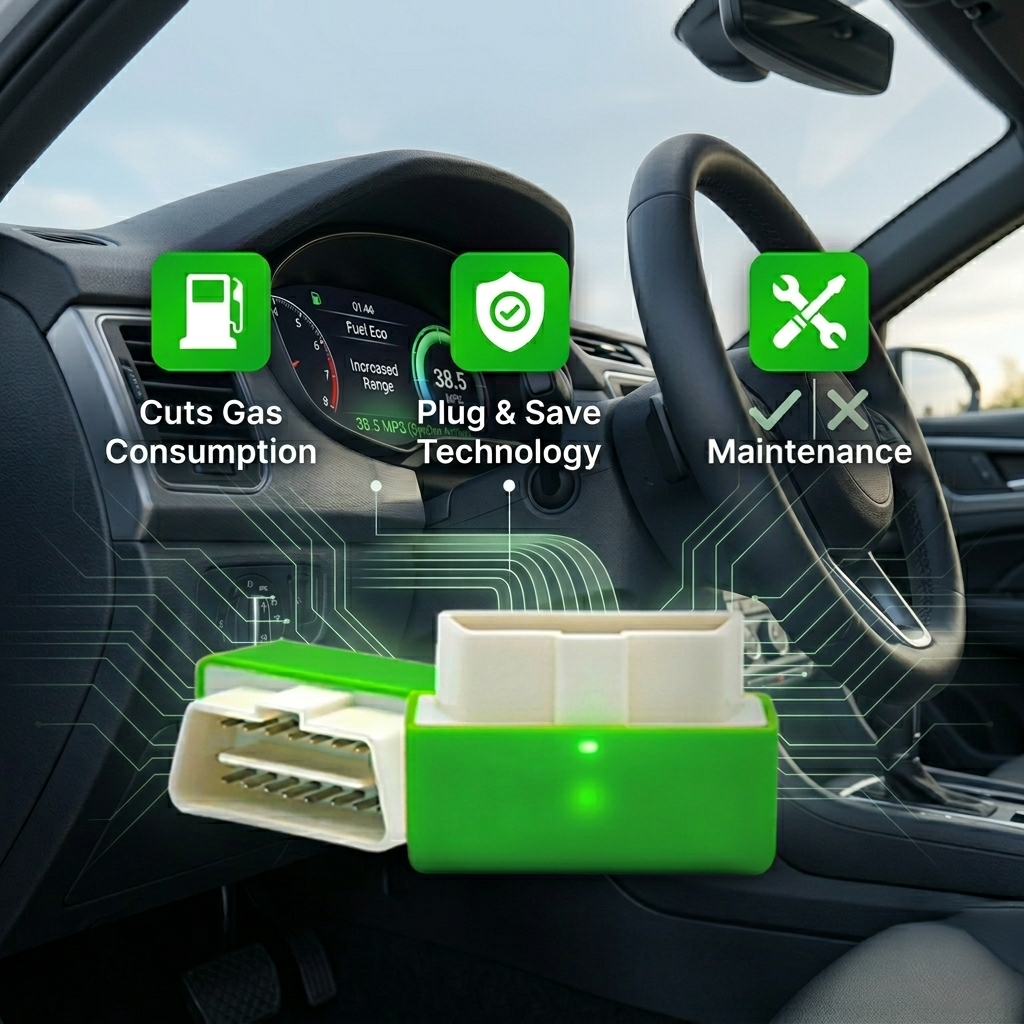
SynGas is a plug-in OBD2 device designed to optimize fuel delivery by reading real-time engine data and adjusting injection parameters within factory-safe ranges. It suits drivers seeking incremental efficiency gains in well-maintained vehicles.
Key Takeaways
- SynGas connects to your vehicle's OBD2 port, monitoring engine performance without making permanent modifications.
- The device fine-tunes fuel injection timing and quantity based on real-time driving conditions and load.
- Optimal results typically appear after a 150-mile calibration period as the unit adapts to your habits.
- Best suited for mechanically sound vehicles where routine maintenance isn't the cause of poor fuel economy.
- Individual savings vary by vehicle age, driving style, and trip patterns, usually ranging from modest to noticeable improvements.
How SynGas Works: The Technology Explained
SynGas leverages your vehicle's existing diagnostic infrastructure to make subtle, reversible adjustments to fuel management.
OBD2 Port Connection and Data Reading
The device plugs directly into the standard OBD2 port found in most vehicles manufactured after 1996. Once connected, it reads live data streams including engine load, throttle position, air-fuel ratio, and RPM. This information forms the basis for its optimization calculations.
Fuel Mapping Optimization Process
Note: SynGas does not rewrite your ECU's permanent software. Instead, it applies temporary, adaptive adjustments to fuel injection parameters within the ranges already permitted by your vehicle's factory programming. The goal is to reduce excess fuel delivery during typical driving scenarios while maintaining performance and emissions compliance.
Calibration and Adaptation Period
Allow approximately 150 miles of normal driving for SynGas to learn your patterns. During this phase, the device builds a profile of your acceleration habits, typical routes, and load conditions. Measurable fuel economy changes usually become apparent only after this calibration completes.
Who Benefits Most from SynGas
Not every driver or vehicle will see the same results. Understanding your situation helps set realistic expectations.
Ideal Vehicle Profiles
Consider SynGas if your vehicle matches these criteria:
- Manufactured after 1996 with a standard OBD2 diagnostic port
- Mechanically sound with up-to-date maintenance records
- Used primarily for commuting or regular driving patterns
- Showing no active check-engine lights or diagnostic trouble codes
Who Should Address Other Issues First
SynGas optimizes fuel delivery but cannot fix mechanical problems. Prioritize these checks before installation:
- Replace dirty air filters or worn spark plugs
- Verify tire pressure matches manufacturer specifications
- Resolve any active diagnostic trouble codes or warning lights
Realistic Expectations and Performance Data
Honest assessment requires understanding both potential benefits and limitations.
What Real-World Use Shows
Independent user reports and controlled tests suggest fuel economy improvements typically range from 5 to 15 percent in suitable vehicles. Results depend heavily on baseline vehicle condition, driving style, and trip composition. Short city trips may show less benefit than consistent highway driving.
Factors That Influence Results
Several variables affect whether you'll notice meaningful savings:
- Driving style: Smooth acceleration and anticipatory braking maximize optimization potential
- Vehicle maintenance: A well-serviced engine responds better to fine-tuning
- Fuel quality: Consistent use of recommended octane supports stable calibration
- Trip patterns: Regular routes allow the device to adapt more effectively
Safety, Compatibility, and Warranty Considerations
Responsible use means understanding how SynGas interacts with your vehicle's systems.
Reversibility and Factory Settings
Note: Removing SynGas instantly restores your vehicle's original factory fuel mapping. The device makes no permanent changes to your ECU, which matters for warranty considerations and resale.
Vehicle Compatibility Checklist
Most gasoline-powered vehicles manufactured in or after 1996 include a standardized OBD2 port. Diesel vehicles, hybrids, and electric models may have limited compatibility. Verify your specific model on the official site before purchase.
Pros and Cons: An Honest Breakdown
A transparent look at strengths and limitations helps you decide if SynGas fits your needs.
| Category | Details |
|---|---|
| Primary function | Optimizes fuel injection timing within factory-safe parameters |
| Installation | Plug-and-play via OBD2 port, no tools or technical skills required |
| Reversibility | Fully removable with instant return to factory settings |
| Result timeline | Requires ~150 mile calibration before measurable improvements appear |
| Best-case scenario | Well-maintained vehicle, consistent driving patterns, realistic expectations |
Pros
- Simple installation with no permanent vehicle modifications
- Adaptive learning tailors optimization to your specific driving habits
- Compatible with most post-1996 gasoline vehicles
Cons
- Not a substitute for addressing mechanical issues or poor maintenance
- Individual results vary based on vehicle condition and usage patterns
- Calibration period requires patience before evaluating effectiveness
Verdict: SynGas offers a low-risk option for drivers with well-maintained vehicles seeking incremental fuel savings, provided expectations align with realistic performance data.
Complementary Fuel-Saving Practices
Maximize any optimization device by pairing it with proven habits. Maintain proper tire pressure, reduce unnecessary vehicle weight, and practice smooth acceleration. These fundamentals create the best foundation for SynGas to deliver its intended benefits.
Frequently Asked Questions
Does SynGas work on diesel or hybrid vehicles?
SynGas is primarily designed for gasoline engines with standard OBD2 ports. Diesel, hybrid, and electric vehicles may have limited compatibility. Check the official compatibility list for your specific model before purchasing.
How soon will I notice improved fuel economy?
Allow approximately 150 miles of normal driving for calibration. Measurable improvements typically appear after this adaptation period, though results vary by vehicle condition and driving patterns.
Will installing SynGas affect my vehicle's warranty?
Because SynGas makes no permanent changes to your ECU and removes cleanly, it generally does not void factory warranties. However, consult your manufacturer's policy if you have specific concerns.
Fuel optimization isn't about magic fixes. It's about aligning technology with mechanical health and driving discipline. SynGas fits into that ecosystem as a reversible tool for fine-tuning, not replacing, good vehicle care. When used appropriately, it can help close the gap between factory settings and real-world efficiency.
Ready to Try SynGas OBD2 Fuel Saver?
Get the authentic SynGas formula directly from the official manufacturer. Order now for exclusive discounts.
Buy Now at the Official Website