Excessive fuel consumption typically stems from maintenance issues, driving habits, or engine inefficiencies. Understanding these causes helps you address them directly, whether through simple fixes or optimization tools designed to restore your vehicle's intended efficiency.
Key Takeaways
- Under-inflated tires increase rolling resistance, forcing your engine to work harder and burn more fuel per mile.
- Aggressive acceleration and braking waste fuel; smoother driving habits can improve economy by 15 to 30 percent.
- Dirty air filters, worn spark plugs, or faulty oxygen sensors disrupt the air-fuel mixture, reducing combustion efficiency.
- Modern optimization devices like SynGas can help recalibrate engine parameters for better fuel delivery within safe operating ranges.
- Regular maintenance checks catch small issues before they become costly fuel drains.
Common Mechanical Causes of High Fuel Consumption
Your vehicle's fuel economy depends on precise mechanical function. When components wear or settings drift, the engine compensates by using more fuel.
Tire Pressure and Rolling Resistance
Under-inflated tires create excess drag against the road surface. This forces the engine to deliver more power to maintain speed, directly increasing fuel consumption. Check tire pressure monthly against the manufacturer's recommended PSI, found on the driver's door jamb.
Air Filter and Intake Restrictions
A clogged air filter limits airflow to the engine, disrupting the ideal air-fuel ratio. The ECU may respond by enriching the mixture, burning extra fuel to maintain power. Replace air filters per your service schedule, or sooner in dusty conditions.
Ignition System Issues
Worn spark plugs or failing ignition coils cause incomplete combustion. Unburned fuel exits through the exhaust, wasting money and increasing emissions. Most manufacturers recommend spark plug replacement between 30,000 and 100,000 miles, depending on type.
Sensor and ECU Calibration
Oxygen sensors, mass airflow sensors, and coolant temperature sensors provide critical data to the engine control unit. Faulty readings can cause the ECU to miscalculate fuel needs. Diagnostic scans can identify sensor issues before they significantly impact fuel economy.
Driving Habits That Increase Fuel Use
Mechanical condition sets the baseline, but how you drive determines actual consumption.
Aggressive Acceleration and Braking
Rapid throttle inputs demand extra fuel for quick power delivery. Hard braking then wastes that energy as heat. Smooth, anticipatory driving maintains momentum and reduces the fuel needed per mile traveled.
Excessive Idling and Short Trips
Idling consumes fuel without moving the vehicle. Short trips prevent the engine from reaching optimal operating temperature, where fuel vaporization and combustion are most efficient. Combine errands when possible to minimize cold-start cycles.
Vehicle Load and Aerodynamics
Extra weight requires more energy to accelerate. Roof racks, cargo boxes, or open windows at highway speeds increase aerodynamic drag. Remove unnecessary items and accessories when not needed to preserve fuel economy.
How Engine Optimization Tools Work
When maintenance and habits are addressed, some drivers explore electronic optimization to fine-tune fuel delivery.
Understanding ECU Fuel Mapping
Factory engine control units use conservative fuel maps to ensure reliability across all conditions, fuel grades, and driving styles. This safety margin means most vehicles operate slightly richer than necessary under typical daily use.
What SynGas Does and How It Connects
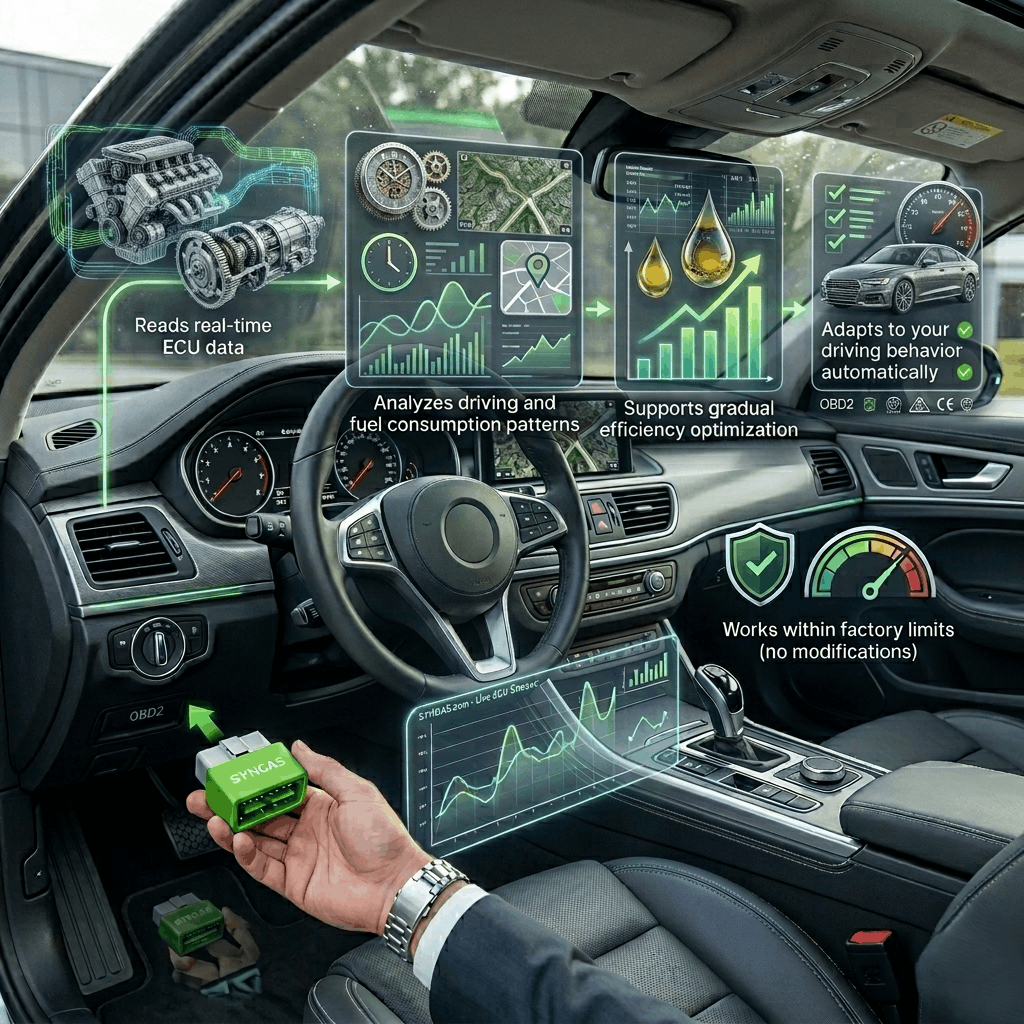
SynGas is a plug-in device that interfaces with your vehicle's OBD2 diagnostic port. It reads real-time engine data and applies calibrated adjustments to fuel injection timing and quantity within the ECU's existing operating parameters. The device adapts to your driving patterns over approximately 150 miles of normal use.
Note: SynGas does not permanently alter factory programming. Removing the device instantly restores original settings.
Realistic Expectations and Calibration Time
Fuel savings vary by vehicle age, engine type, and driving conditions. Older vehicles with less refined factory tuning often show more noticeable improvements. Allow the full calibration period before evaluating results, and track fuel economy over multiple tanks for accurate comparison.
Evaluating Solutions: Maintenance First, Then Optimization
Address mechanical issues before considering electronic aids. A well-maintained vehicle provides the best foundation for any optimization tool.
Consider these factors when weighing your options.
| Factor | Maintenance Focus | Optimization Device |
|---|---|---|
| Primary Role | Fix mechanical faults causing waste | Fine-tune fuel delivery within safe margins |
| Best For | Vehicles with service gaps or warning lights | Well-maintained vehicles seeking incremental gains |
| Time to Results | Immediate after repair | After ~150 mile calibration period |
| Reversibility | N/A (repairs are permanent fixes) | Fully reversible, no permanent changes |
Pros: Maintenance and optimization can work together
- Routine service prevents small issues from becoming fuel drains
- Optimization devices may fine-tune delivery after mechanical health is confirmed
- Combined approach addresses both root causes and efficiency margins
Cons: Limitations to consider
- No device can overcome significant mechanical wear or damage
- Results depend on vehicle compatibility and driving patterns
- Calibration time requires patience before measuring outcomes
Verdict: Start with a diagnostic check and basic maintenance. If fuel consumption remains high despite good mechanical condition, reversible optimization tools offer a low-risk next step.
Frequently Asked Questions
Can a simple tune-up fix high fuel consumption?
Often yes. Replacing air filters, spark plugs, or fixing oxygen sensors restores proper air-fuel ratios, which can significantly improve mileage without additional devices.
How long does it take to see results from an ECU optimizer?
Most devices require about 150 miles of normal driving to calibrate to your vehicle and habits. Measurable improvements typically appear after this initial learning period.
Will optimizing my ECU void my car's warranty?
Reversible plug-in devices that don't permanently alter factory programming generally do not affect warranty coverage. However, always confirm specific terms with your manufacturer if you have concerns about your vehicle's warranty.
Fuel efficiency isn't just about the device you install or the last service you had. It's the sum of consistent maintenance, mindful driving, and smart use of available technology. When mechanical issues are ruled out, tools that work within your vehicle's existing systems can help close the gap between factory settings and real-world efficiency.
Ready to Resolve High Fuel Consumption?
Get the authentic SynGas formula directly from the official manufacturer. Order now for exclusive discounts.
Buy Now at the Official Website